For curious minds
See how the pieces connect.
Build a perspective on intelligence across scales. Follow a question through an essay, test an idea in the lab, or experience a possible world through fiction.
Start exploring ↗From cells and individuals to companies and societies.
Get insights through essays, interactive experiments and fiction, or work with me on AI, products and new ventures.
Move closer. Click to spark a cascade. Drag to reshape.
Enter or Space sends a signal from the selected bubble. Arrow keys move it. N selects another bubble; I enters its inner network; O selects its outer bubble. Escape disconnects the pointer.A perspective. A practice.
How do we become more capable of understanding and acting together? Explore the question, or bring it into something you are building.
For curious minds
Build a perspective on intelligence across scales. Follow a question through an essay, test an idea in the lab, or experience a possible world through fiction.
Start exploring ↗For people building what’s next
Explore an AI opportunity, sharpen a product or venture decision, or help your team find a shared direction through advisory, workshops and talks.
Explore working together ↗Ideas in conversation · Aligned
I joined Henrik Kniberg and Simon Strålberg on Align Sweden’s podcast Aligned to explore AI agents, collective intelligence and how we find our way when the future is hard to predict.
A thread running through the conversation: intelligence involves discovering what deserves our attention, what we need to learn and what is worth trying next.
Intelligence across scales
What if intelligence is something that takes shape between people, AI, tools and organisations? Follow that perspective into proposed principles for how they might learn and coordinate.
Ten Commandments for Collective Intelligence ↗Exploration before certainty
Sometimes the useful next step is to learn more before acting. Try that question in Two Gates, a small experiment that makes the trade-off between gathering information and pursuing a goal visible.
Try Two Gates ↗From tacit knowledge to agents
Asking an agent to do a job exposes rules, exceptions and values that people usually leave unspoken. It also raises a deeper question: how does a system learn what matters when a situation changes?
AI Alignment Is an Architecture Problem ↗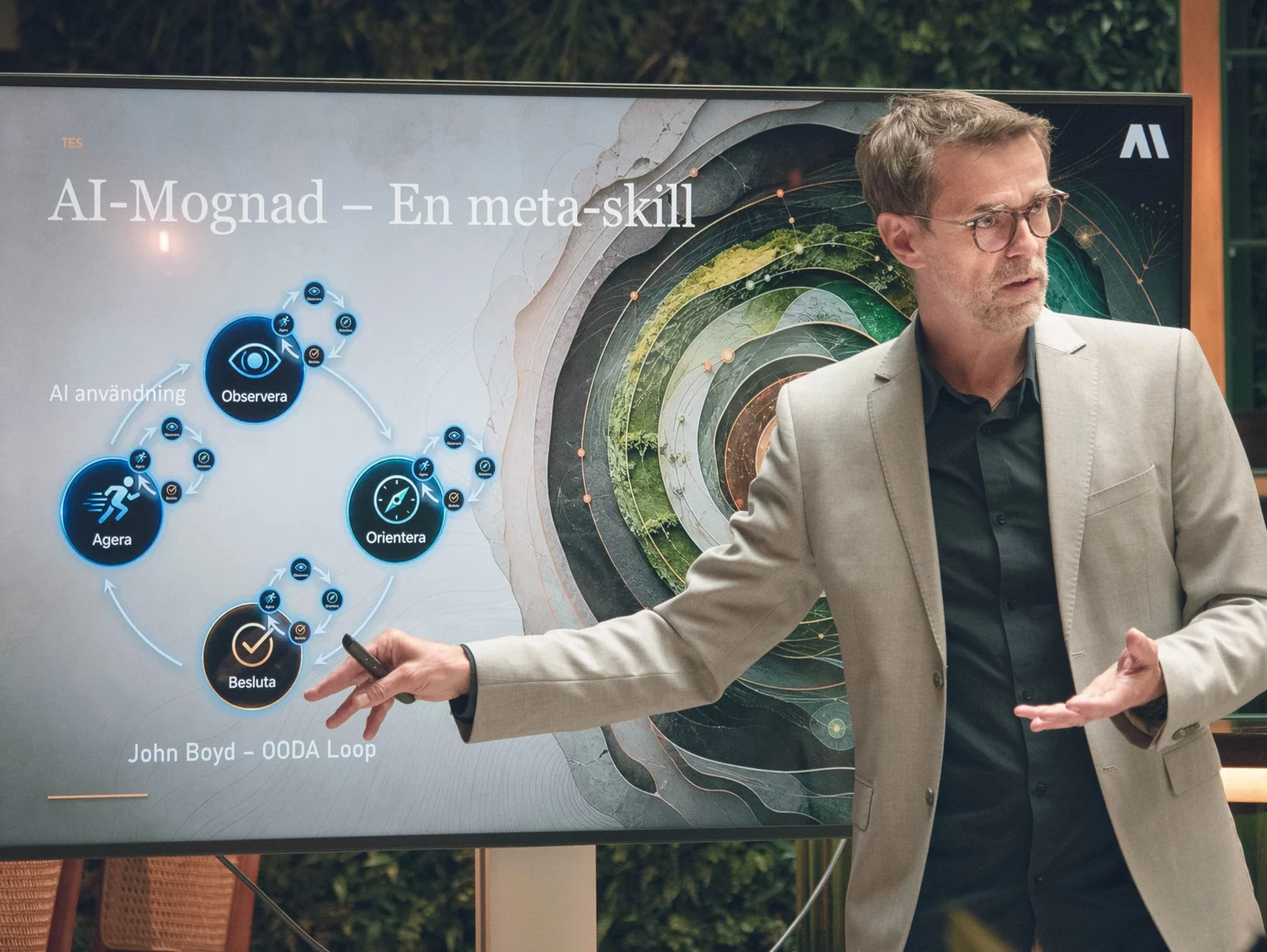
For startups, venture teams & companies
I bring experience in product building, venture exploration, startup coaching and teaching to questions about AI, innovation and how we work together.
What is?
Look closely at the connections: between technologies, between people, and between the signals a system can hear and those it cannot.
Explore Observe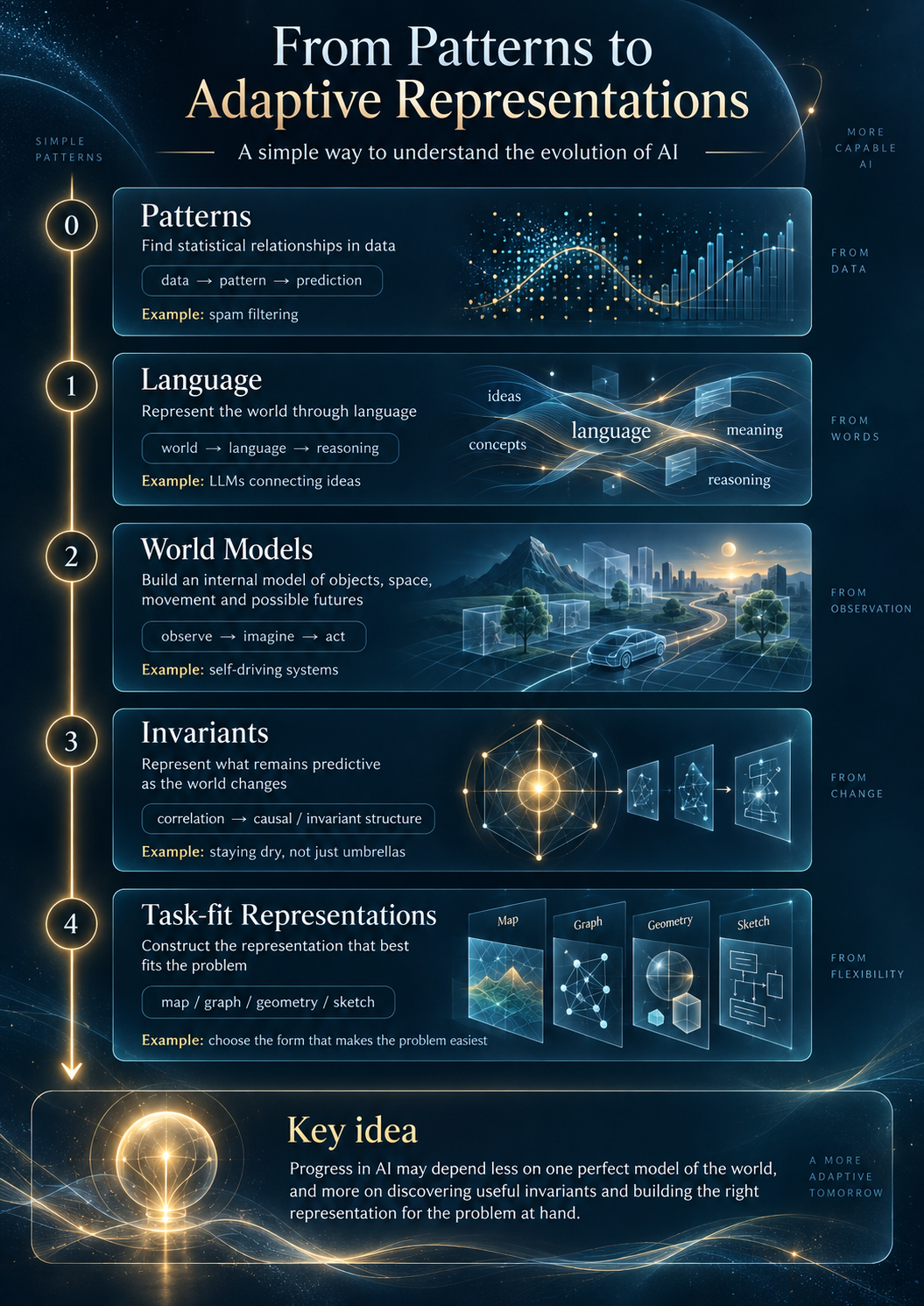
From recognizing patterns to constructing the right representation for a problem. Five lenses on how AI can learn, generalize and adapt.
Read the essayWhat could be?
Give an idea a world to live in. Change a rule, move an agent, breed a pattern, and see what becomes possible.
Explore Imagine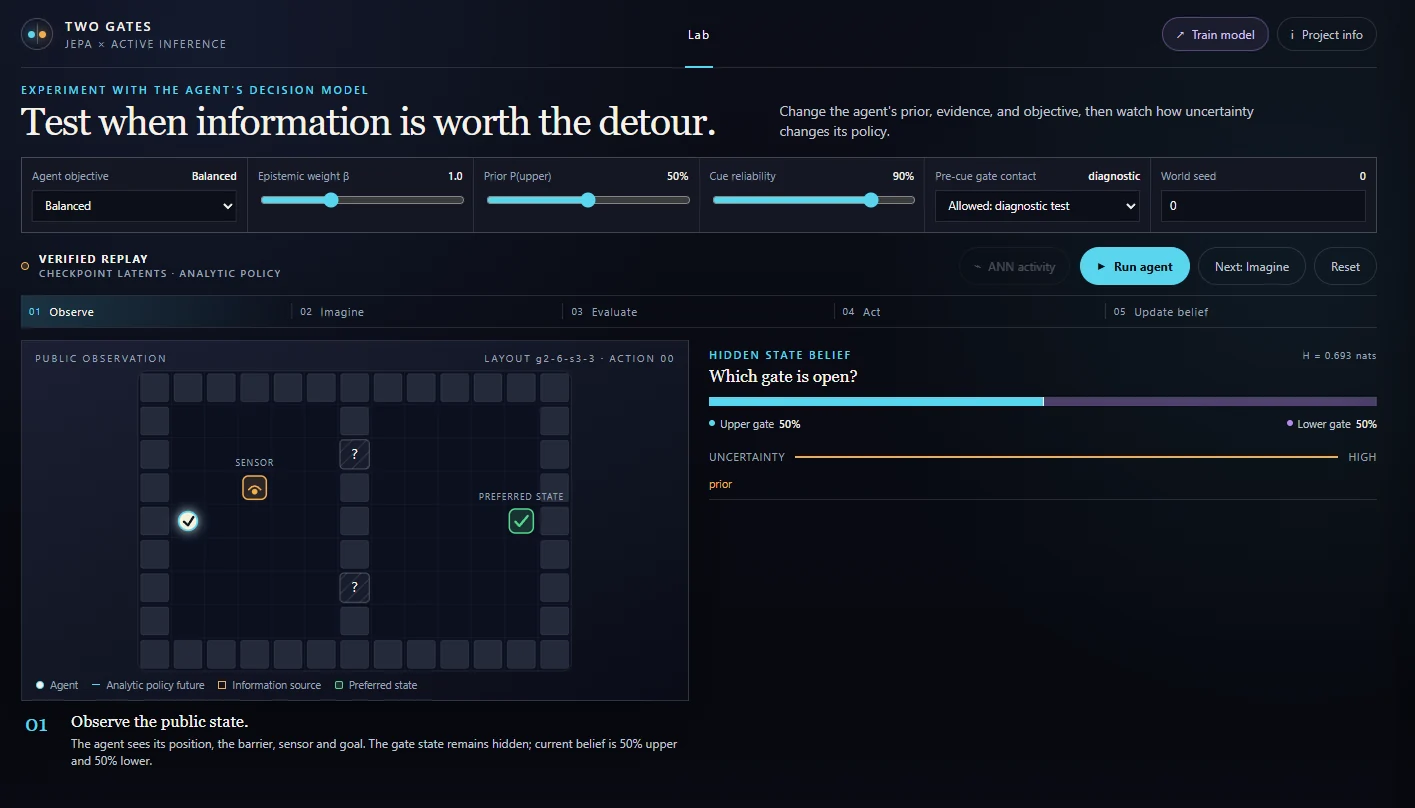
Explore when information is worth a detour. Compare imagined futures, uncertainty and action in a small decision environment.
Explore the experimentWhat matters?
Put an attractive idea under pressure. These essays explore the assumptions behind alignment, intelligence and the futures we choose.
Explore Evaluate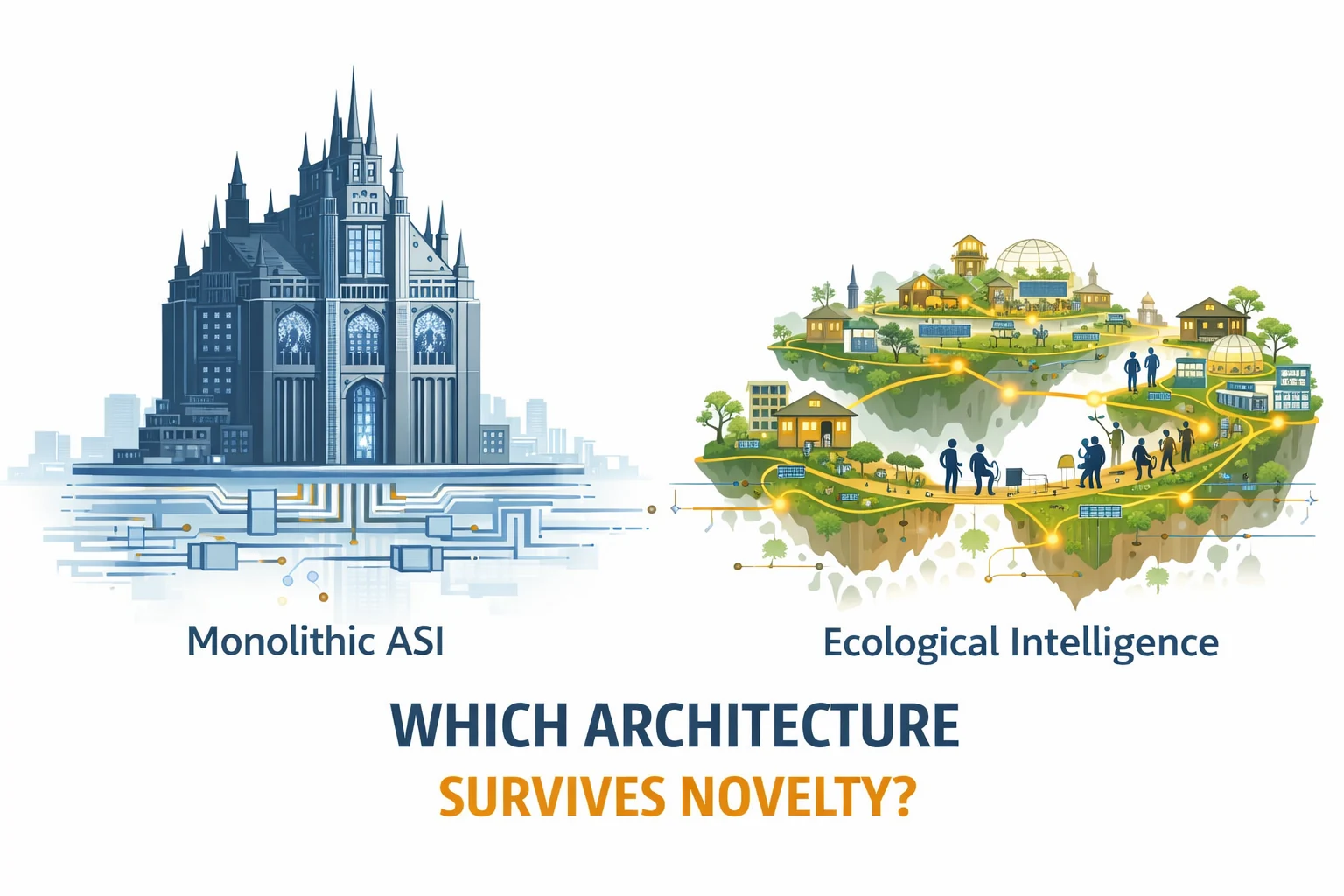
Why alignment may depend on how intelligence is organized, and how it learns what matters under pressure.
Read the essayChange the world.
A model meets reality through a product, a venture or an experiment. Action turns assumptions into something we can examine.
Explore ActWhen AI shapes both products and consumer preferences, who steers the feedback loop? An essay written at Desifer in 2023.
Read the essayLet the world change you.
Every return to the loop begins from a different place. Reflections on identity, participation, and the ways learning changes the learner.
Explore Become
A reflection on learning, the Hero’s Journey, and finding a livable course between rigidity and collapse.
Read the essayImagine · The lab
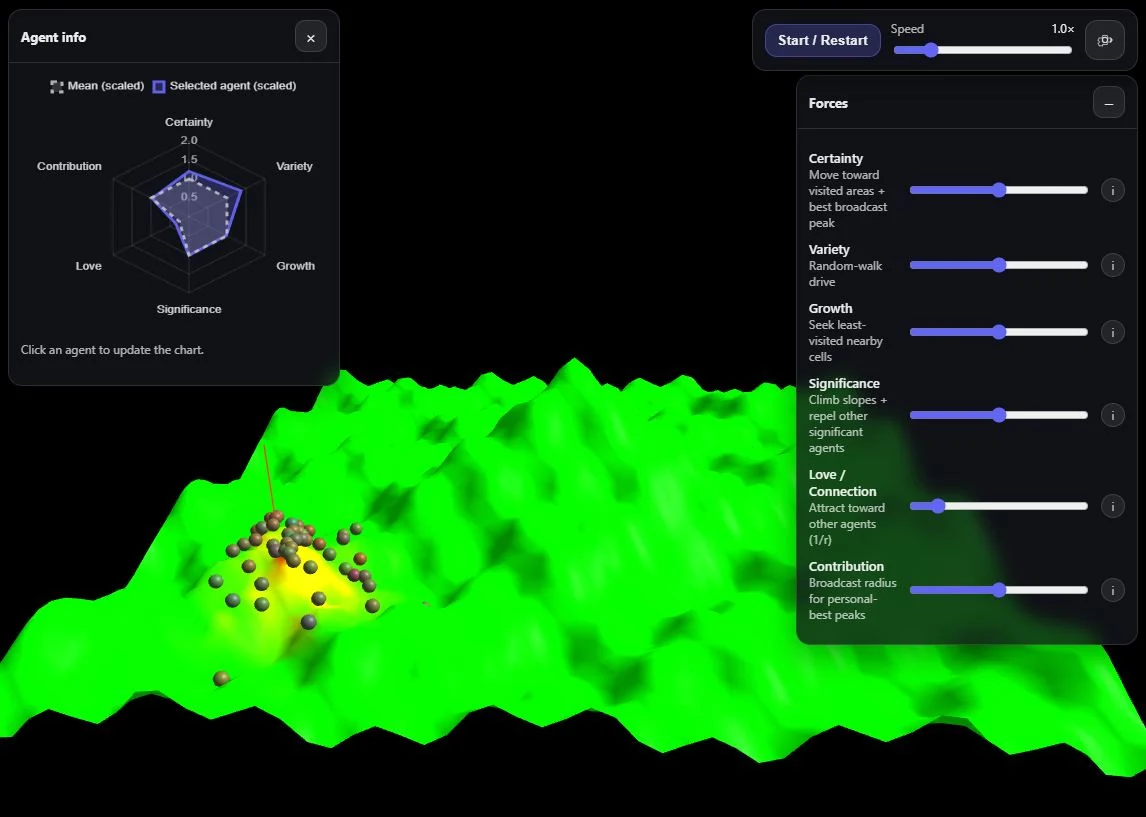
Agents explore a landscape using different mixtures of certainty, variety, connection, significance, growth and contribution.
Explore the experiment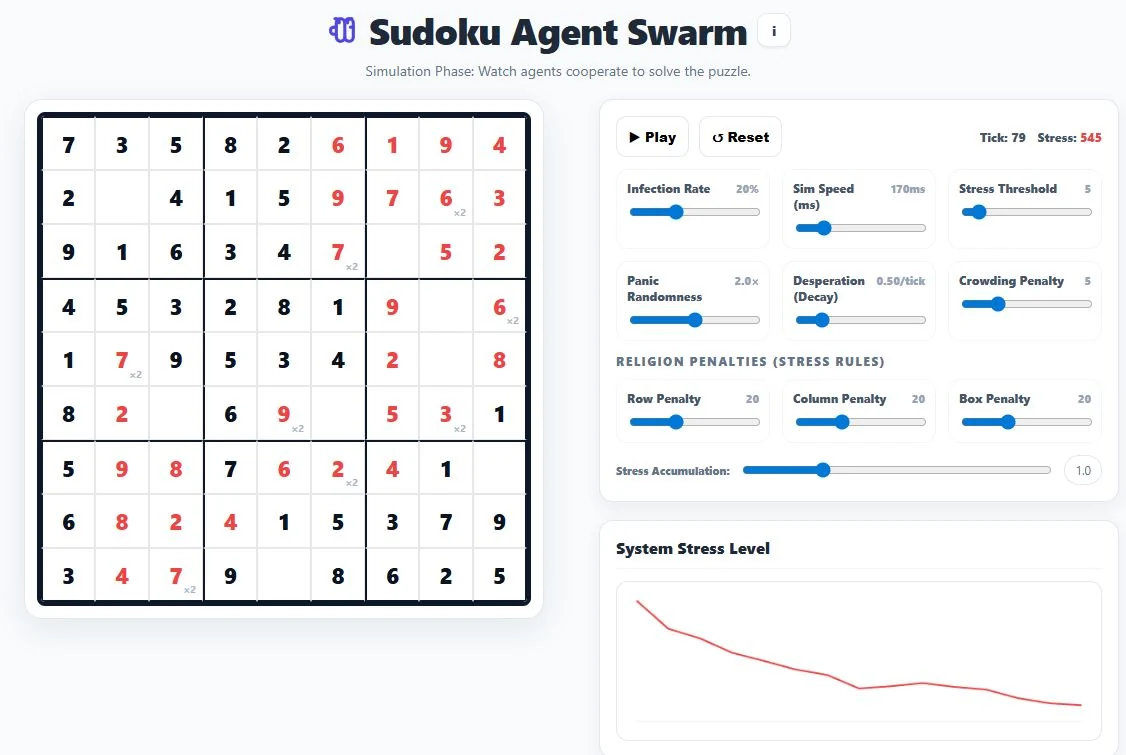
Numbers act as agents, moving to reduce conflicts within their row, column and box.
Explore the experiment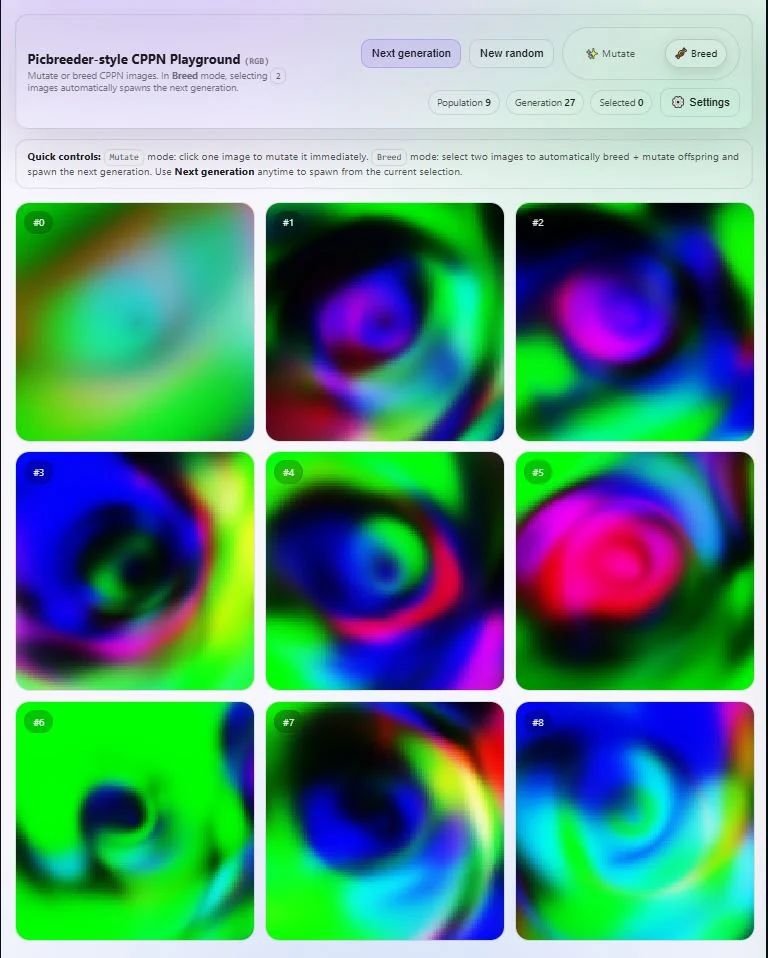
Choose images you find interesting and breed new generations of neural patterns.
Explore the experiment
Experience the ideas through fiction
Love. AI. Technology. Faith.
Questions of AI, responsibility and the limits of control become a story about the people we love.
Oskar and Sara want to protect their daughter Astrid. In trying to keep her safe at any cost, they open the door to a reality in which nothing is certain.
Discover the Swedish novel ↗
Per Nystedt · Builder, writer, explorer
Over two decades I have worked as an innovator, founder, venture builder, startup coach and teacher. I have built products, led teams and been granted patents. Today, I bring that experience into writing, simulations and conversations about AI and complex adaptive systems.
More about Per ↗Start a conversation
Tell me about the opportunity, decision or question in front of you. We can explore whether advisory, a workshop or a talk would help.
Contact & collaboration ↗